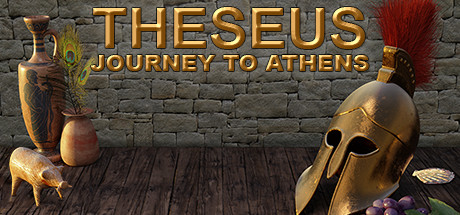
Steam: Theseus: Journey to Athens on Steam
Premise:
Lead the ancient hero Theseus as he seeks out his father. The story is heavily rooted in classical texts like Pausanias’ Guide to Greece, Plutarch’s Life of Theseus, Apollodorus’ Bibliotheca, and shorter works and fragments such as those of Bacchylides.
Good:
- The premise and the setting are very unique.
- The presentation is very good. The actual game itself uses a top-down camera. The overall graphics remind me of Age of Empires 1: Rise of Rome.
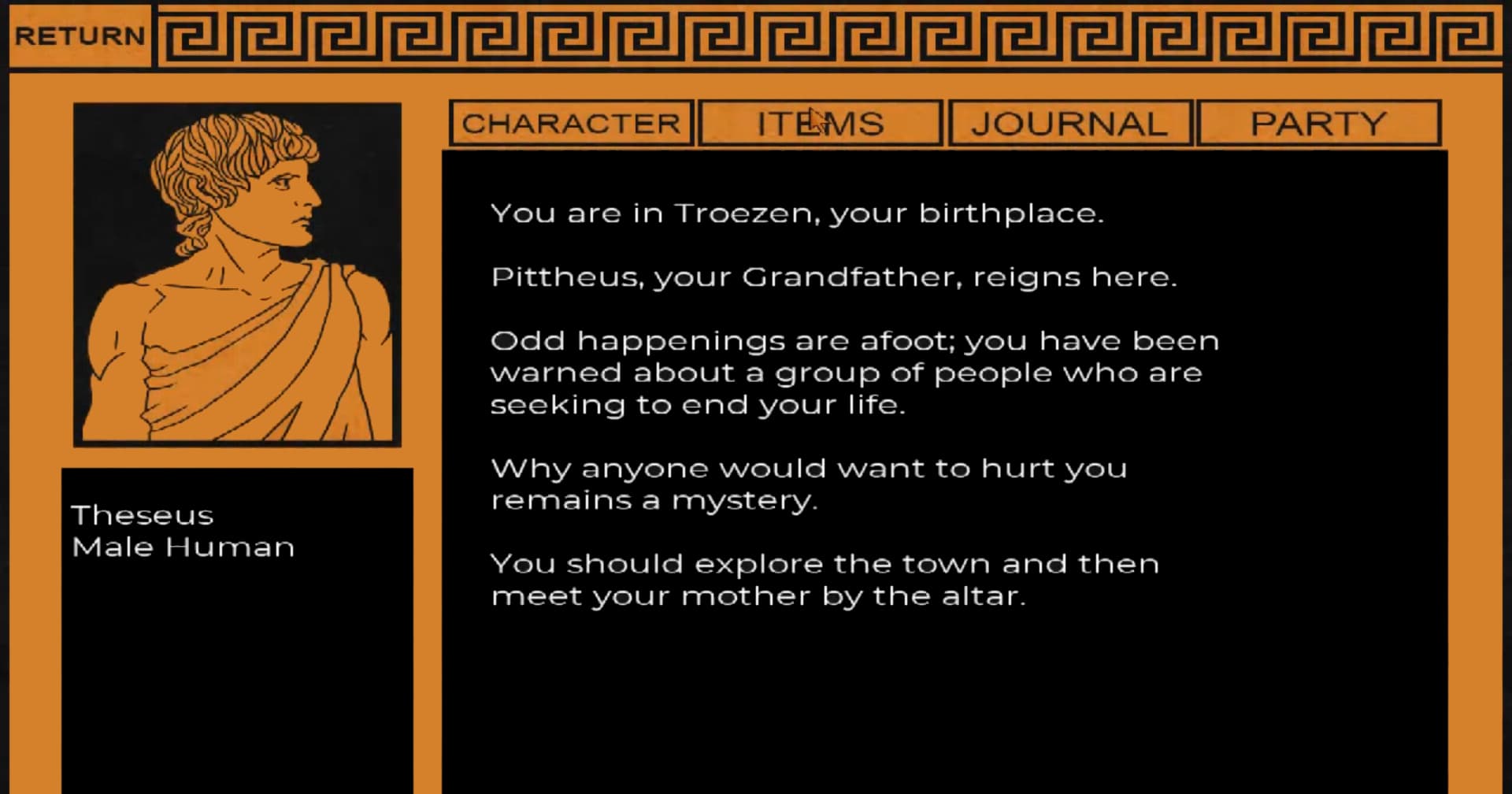
- Continuing on the previous point, the user interface design and character portraits look straight out of Ancient Greek art pieces such as pottery. For example, check this out -
- Adding to the previous point, several interactions have nice flavor texts that have their own unique presentation that is complemented by a very fitting art style.
- The world is also quite satisfying to explore, partly because Ancient Greek RPGs are rare. Unlike massive open-world games like Svarog’s Dream, Sacred: Gold or Grim Dawn, the map isn’t one continuous expanse. Instead, it’s divided into distinct zones that you can travel between freely, similar to Kult: Heretic Kingdoms or Inquisitor.
- Despite being based on a well-established classic Greek tale, the game features a decent amount of NPCs who have side quests for you. Even these side quests have nice flavor texts. The quest NPCs don’t have unique identifiers, in true classical RPG fashion, you discover the quests through conversations.
- There is a decent amount of choices and consequences throughout both the main story and side quests. Failing to complete or even simply not picking up some quests will have consequences that are conveyed through flavor text. For certain quests, the choices aren’t straightforward, making the exploration of each path especially engaging.
- Adding to the previous point, some quest solutions depend on your character stats.
- The combat is turn-based. It is fairly challenging. You are often out numbered, therefore you need to strategize how you approach combat sequences.
- The game also features some level of party management. But, this isn’t terribly deep.
- Short and sweet, this encourages multiple playthroughs just to discover the outcomes of choices you didn’t make.
- The OSTs fit the setting nicely.

Bad/Neutral:
- Despite the unique presentation, the game might not appeal to those who seek high graphical fidelity. This didn’t bother me personally, but I can see it turning away some folks.
- As I mentioned earlier, the combat is punishing. In some encounters, this can verge on frustration.
- The game doesn’t have a lot of combat encounters. But the ones that do exist are all relevant in one way or the other. This means that there are no trash mobs, every combat encounter has a story relevance. I find this approach fascinating, but again this might discourage some from playing this.
- Itemization is fairly limited.
- There is no traditional character progression. Meaning, you don’t get experience points from solving quests to gain levels or receive stat points for you to distribute. Your character progression is tied to how you approach quests. Some choices might boost your intelligence, others might boost your dexterity. While, I like the idea behind this approach, I wasn’t a fan of the decision to have no traditional character progression system. Same with the skill system, not impressed.
My Thoughts:
This is a very unique RPG with an unusual premise set in an underutilized world (only other games that I can think of in this setting are Aletheia and Titan Quest) and presented in a very distinctive style. I strongly recommend it to anyone who loves the genre, if only to experience how different and memorable the overall experience is.