Greetings, pioneers! For those that may not be aware, we are nearing Farthest Frontier’s 1 year anniversary since leaving Early Access. This was a tremendous moment for us, but did not mean we were done with the game. Since v1.0, we had 9 updates ranging from small hotfixes to the major v1.1 update that overhauled the way you approached town construction. We released our first small DLC, adding adorable cats and dogs to your settlements, along with new pests to terrorize your fields and chickens. Then, things got a bit quiet for a while.
Today, we are ready to lift the veil on what we’ve been cooking with our next major free content update, v1.2. Hopefully by the end you will feel the wait has been well worth it!
Note: the following preview represents work-in-progress mechanics and some of this may change before it goes live.
Table of Contents
One of the most common complaints about the game has been Frontier’s trading system. We were never fully satisfied with our Trading Post, but realities of game dev meant that it got pushed back in favor of more pressing matters multiple times. With v1.2, it is time to get it right.
We are making major changes to the Trading Post and touching nearly every aspect of the gameplay tied to it.
For starters, buying and selling is about to become much more dynamic. We are introducing supply and demand factors that will shift the value of goods based on how plentiful (or desirable) they are. This will be based on your settlement’s habits, but external factors will also play a part. Have a glut of stone and sell it at every opportunity? That will impact the value of stone when future merchants arrive.
These factors do expire over time, so if you mix up your settlement’s trades, you will benefit from more stable prices.
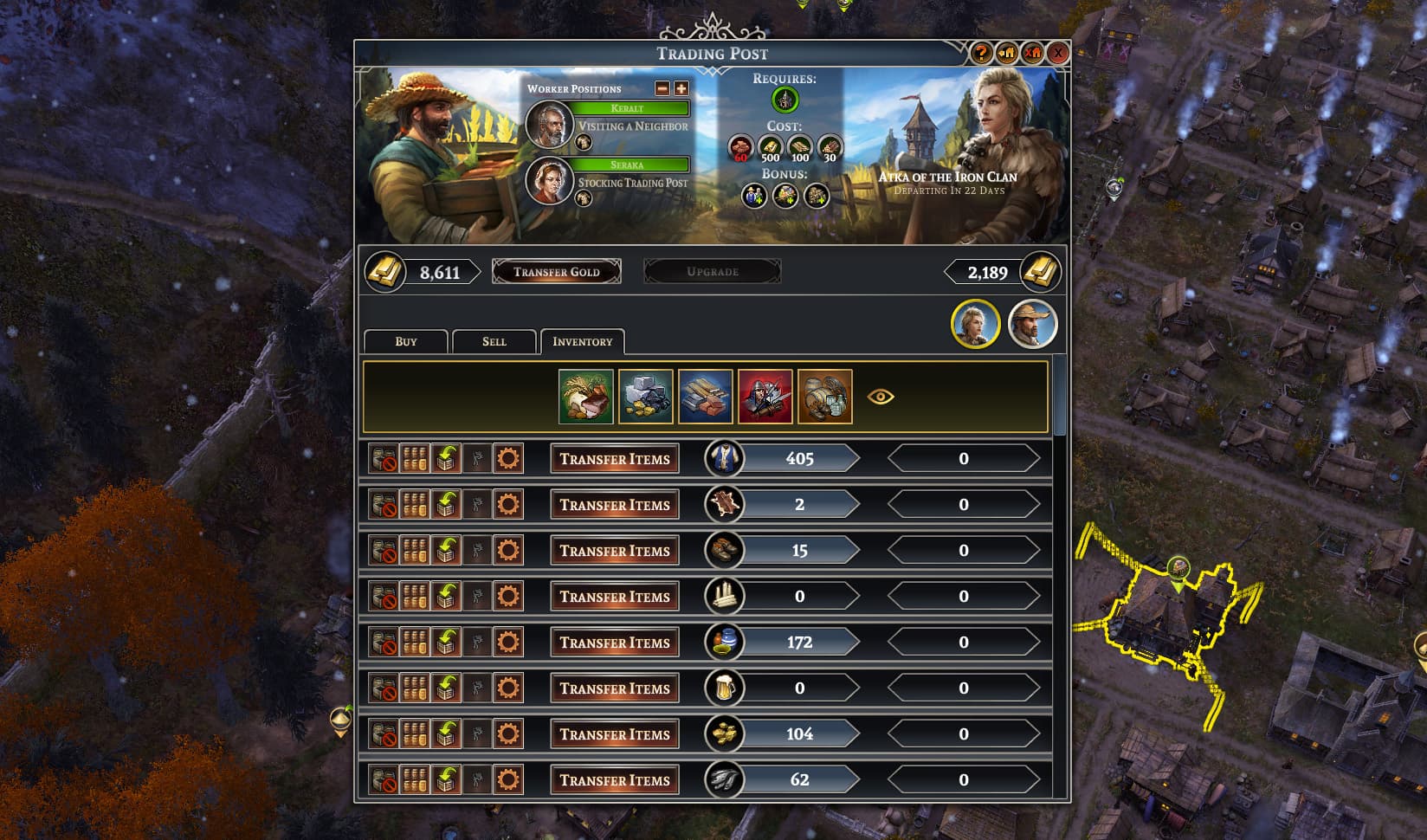
First, you may notice that the UI has been completely overhauled. Buying, Selling, and Inventory Management have been split into their own tabs. This has the immediate benefit of decluttering the screen so that only relevant controls are available.
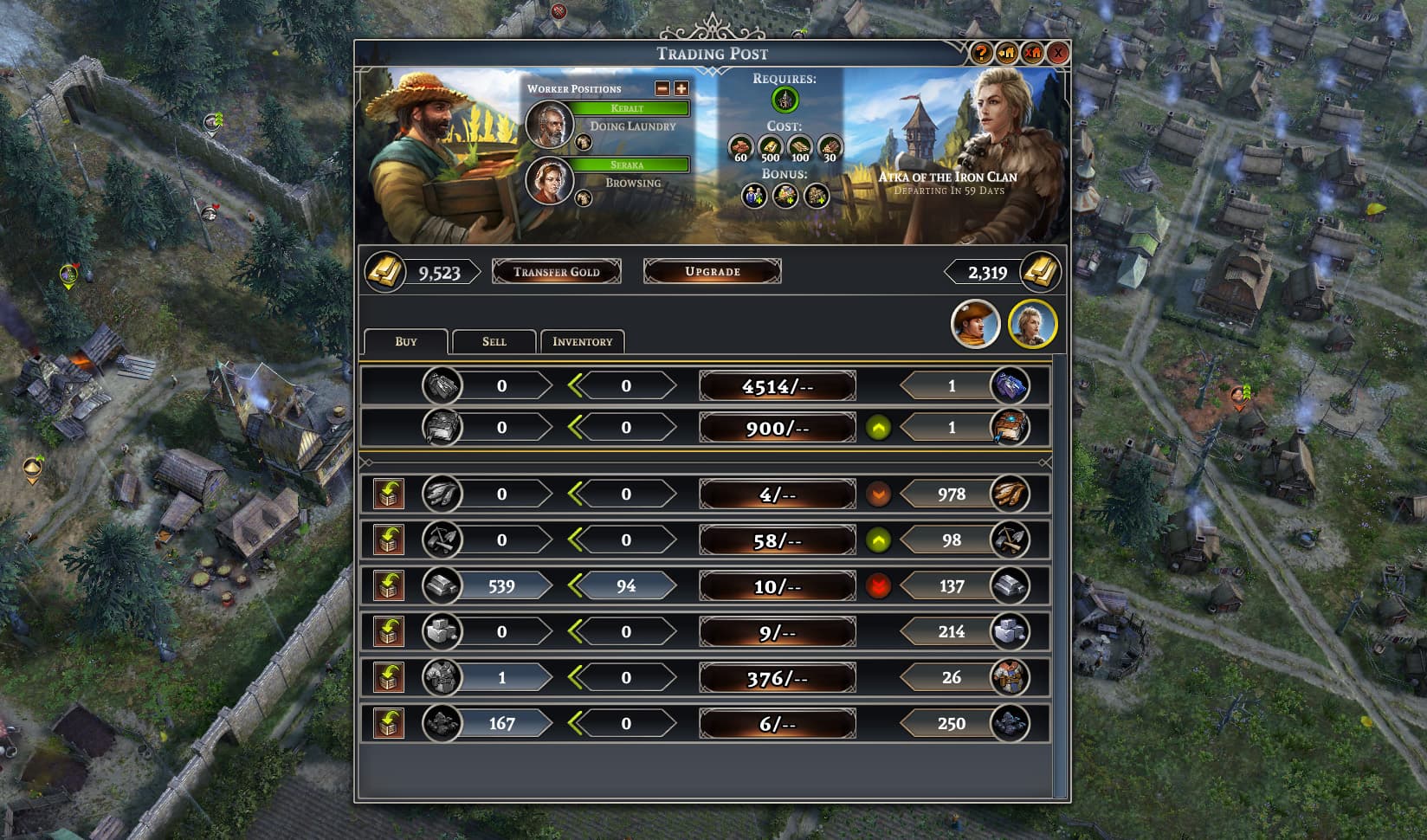
The Inventory screen is where things get interesting though. As the name implies, here is where you manage the Trading Post’s inventory. But we have taken it far beyond its initial barebones implementation. Since this screen is dedicated to just trading, we have removed all items from the list that your settlement cannot stock (ex. Animals and Tomes of Knowledge). In addition, at the top you will have new filter controls, which will let you quickly trim the list down to only the relevant materials.
Next, you will have access to extensive stocking controls, where you can set minimum quotas based on not just what is in the Trading Post itself, but also what is available in the settlement. No more draining your settlement of glass because your auto-stocking grabbed it all. You will be able to precisely tune how many resources you want going to trade and how much you want to leave available for your villagers.
Finally, we will be adding controls for auto-trading! You will have the means to set a buying or trading quota for each resource (sorry, not both at once, no automated buy low sell high ;)), based on how many resources you need/wish to sell and what prices you are willing to trade at. You can even set the auto-trade to infinite quantity, so your villagers can trade a particular resource for you forever as long as the desired parameters are met and gold is available.
Combined with the auto-stocking controls, auto-trading will help you create a steady revenue stream without the need to constantly micromanage your Trading Post.
Next on the list of improvements is the Tech Tree itself. We heard your feedback that late game investments in the Tech Tree felt punishing. In the endgame, a settlement can take years to generate another Knowledge point, which you can then either spend on something basic like Sustainable Farming, or on a high tech feature such as Pharmaceutical Study. In the initial Tech Tree design, both were equivalent, but their impact was certainly not.
This friction was something you did not find fun, and we are inclined to agree. With v1.2, we are overhauling Knowledge generation. Instead of generating 1 point over an increasing amount of time, your settlement will instead generate a steady stream of Knowledge every month. Then, instead of every technology costing a flat 1 point, their costs will scale with the tier and the difficulty of developing the respective tech.
In practice, this will mean maxing out the Tech Tree will take significantly less time, but also, grabbing those low hanging fruit technologies that you skipped later in the game will no longer be a punishment.
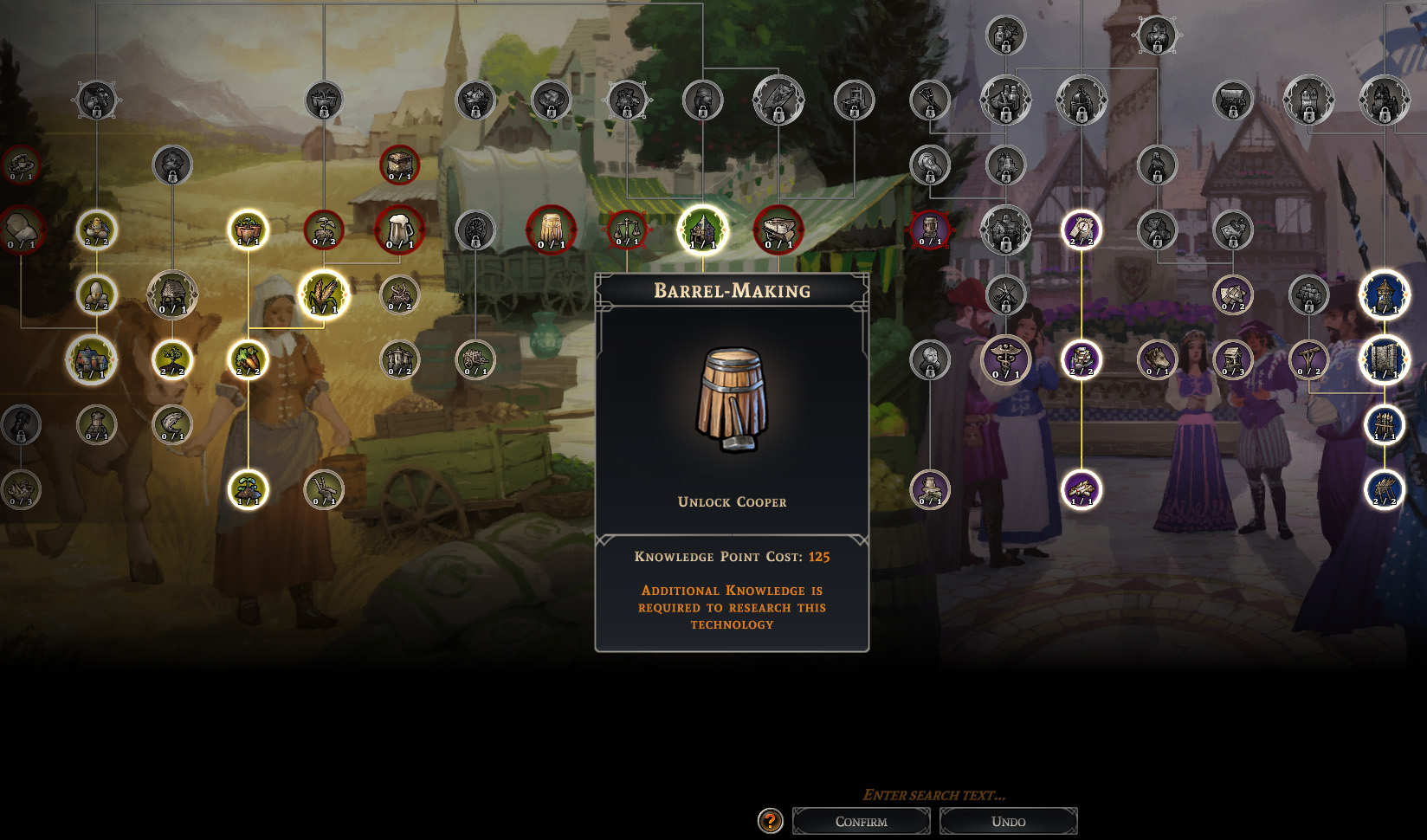
In addition, Tomes of Knowledge you find in salvage, raid camps, and the trading post will unlock specific technologies instead of granting a simple point. If your settlement already has that technology unlocked, you will gain a modest bonus to your stored Knowledge, based on the technology contained within. This will make tomes an interesting way to potentially unlock some technologies earlier than normal, providing new twists for your settlement’s progress.
Altogether, tech tree progression should feel smoother and less punishing in v1.2.
For this next feature, we took inspiration from SageDragoon’s Essential Provisions mod. With the almanac, you can create and save your ideal crop rotations, then use them across other fields, other settlements, and even share them with other players.
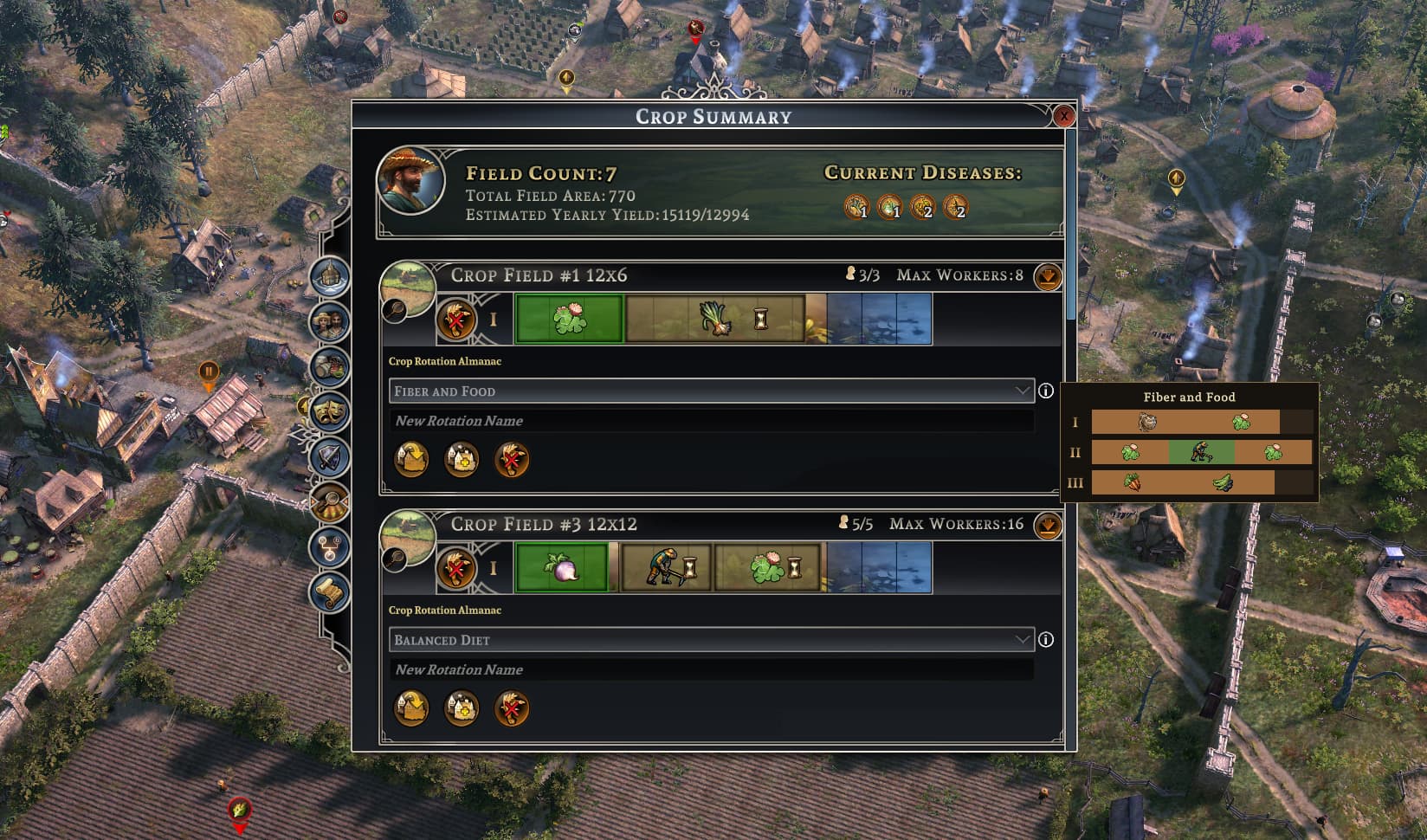
The Crop Rotation Almanac will be accessible both from individual crop fields and from the Crop Summary window, so you can quickly manage your fields.
Something no doubt many of you have run into is villagers getting themselves murdered on wildlife or raid camps. The game has a system for this, where if a resource or task is near danger, they will actively avoid it. However, where this system fails is with objects that are Past a dangerous area but are themselves in a safe spot. We considered several automated options for dealing with this scenario, but ultimately decided that it makes more sense to hand that power over to you.
Enter the Dangerous Area Banner.
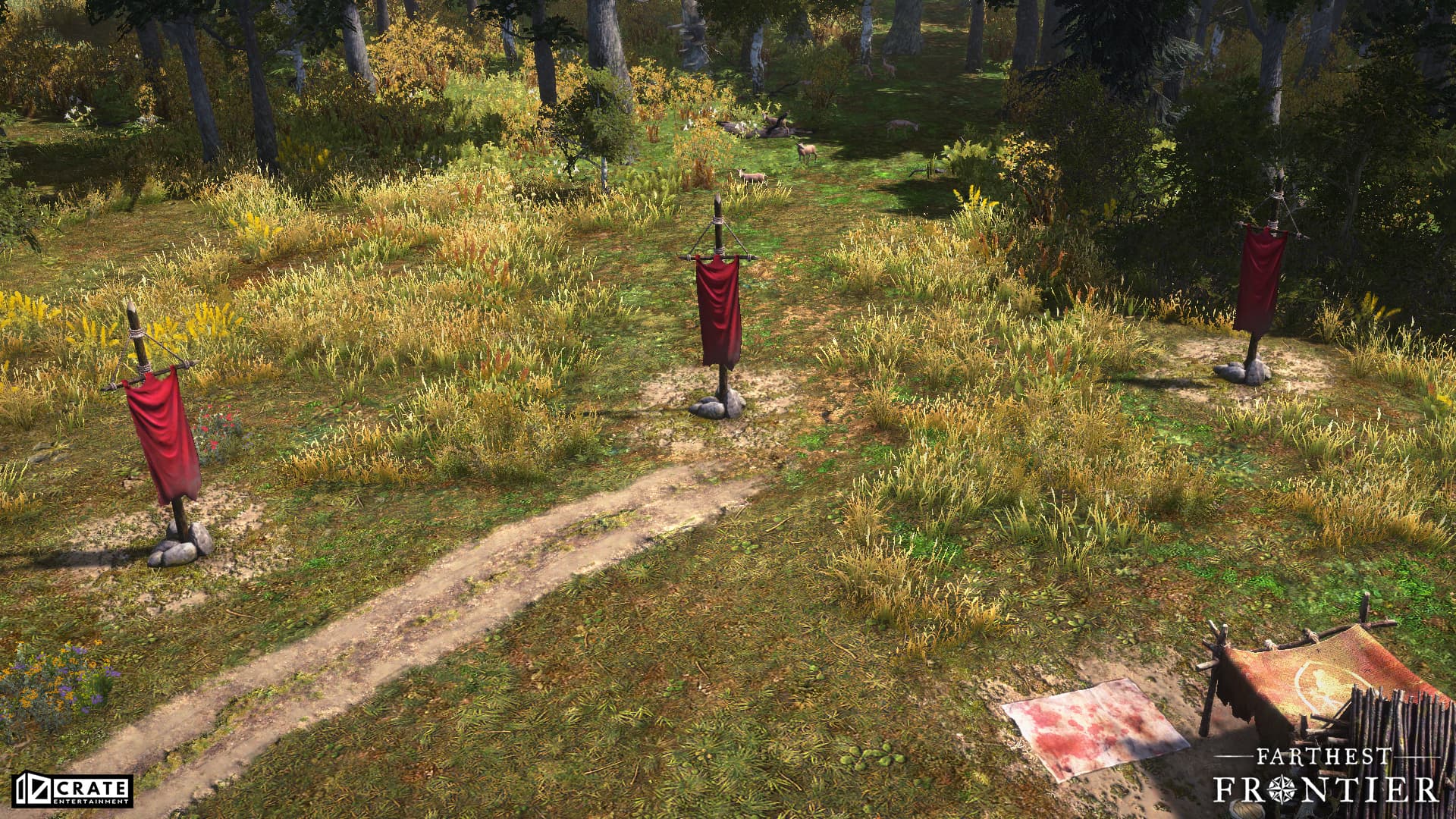
With this new structure, you can designate an area to be off limits to villagers, a…danger zone if you will. The area can be set to 3 different sizes and can be moved anywhere on the map, like an inverse work area, and can be toggled off completely if you just like the aesthetic of the banners themselves.
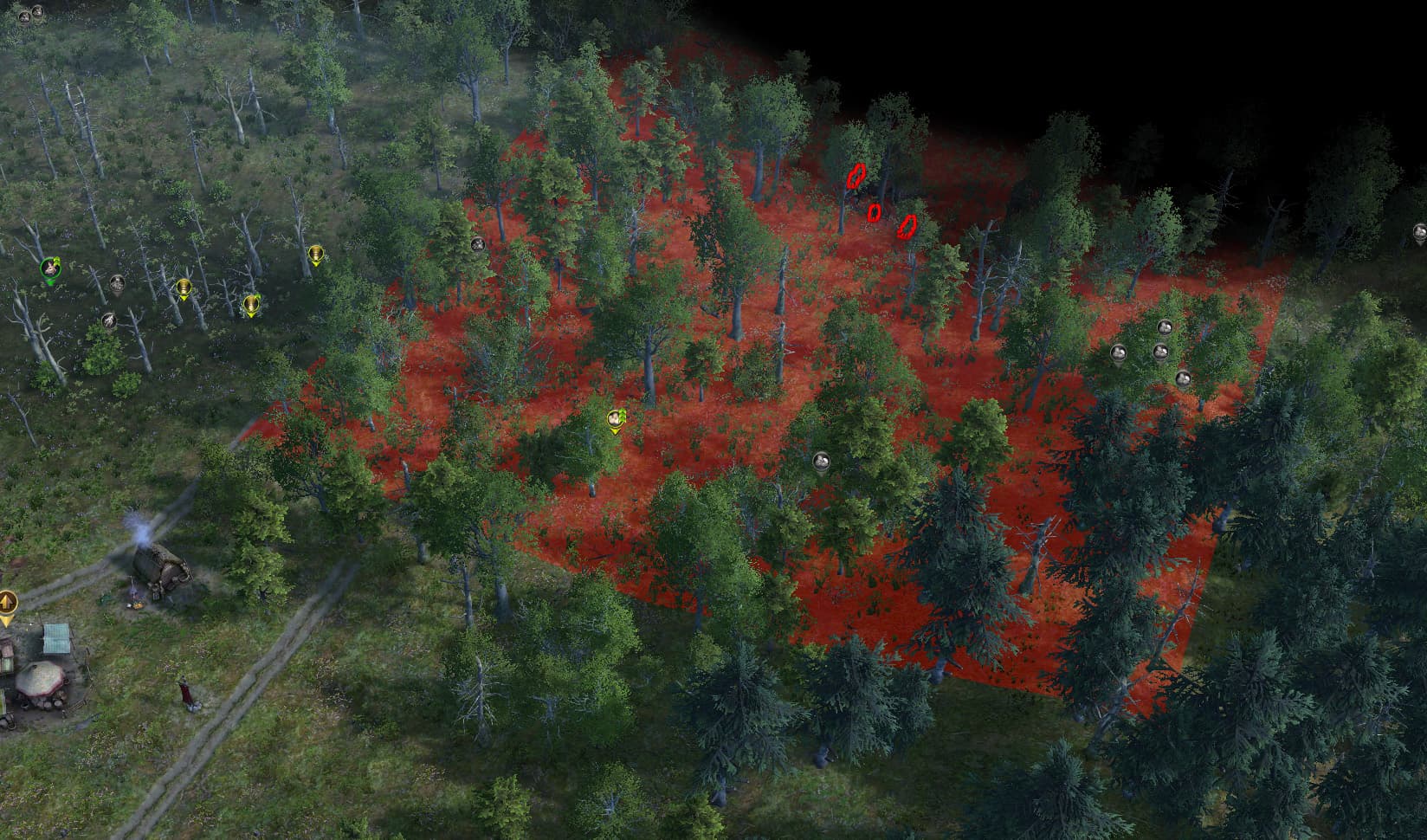
Note: villagers will not treat these zones like a wall, so if you create an impassable situation, they will figure their way through it.
The Construction Office is a new building that allows you to assign a permanent group of dedicated builders. These builders do not return to the laborer pool, but instead dedicate all of their time to new construction and building maintenance.
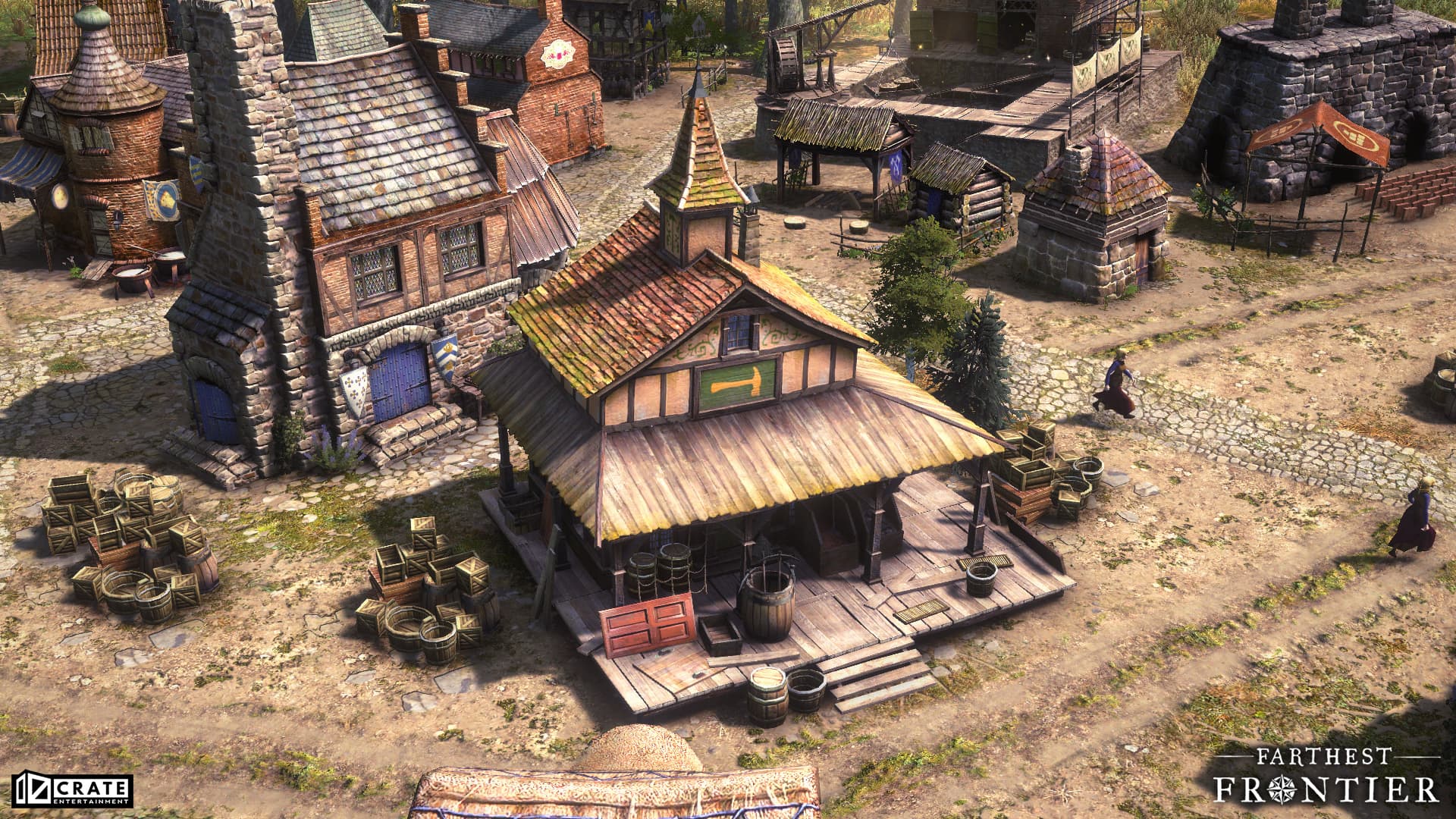
When their default tasks are complete, the Construction Office workers will instead begin reinforcing your shelters and other structures, granting them a bonus to their Structural Integrity that will reduce the frequency with which they will require maintenance in the future.
Like the Construction Office, the Labor Office allows you to create a dedicated pool of laborers that, when they are out of resource gathering tasks, will prioritize transferring goods between storages, if you set storage quotas.
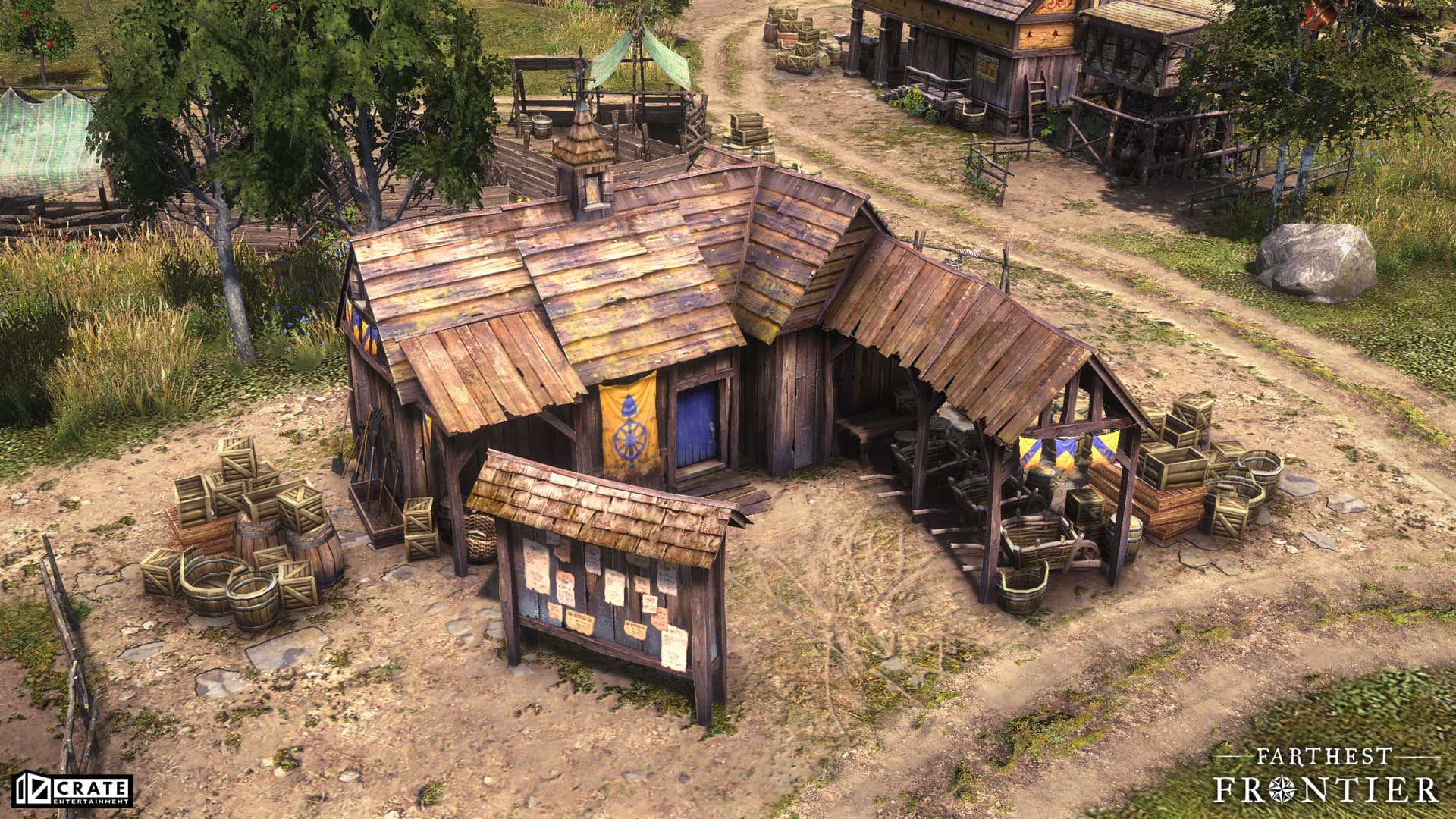
When that is done, they will then focus on delivering goods to production buildings, reducing the time other villagers are spending gathering materials so they can instead focus on generating goods (work work!).
That covers the major features, but not everything in this already massive update made it into its own category. There is always more. Here is an outline of what else we have in store:
- Building window now has a preview of the building’s grid size (ex. 2x3 for a Firewood Splitter).
- Building placement now previews terrain details. In particular, this makes placing plants and plazas easier.
- Map Selection tooltips during town creation now list detailed information about which resources will be available on that map, and which may be absent!
- Road placement button on the HUD now has a right-click toggle to swap it between Dirt and Cobbled roads and bridges.
- Immigrant groups now bring with them more varied resources, where some are better prepared for life in the frontier than others. Also, the rate of immigration has been increased in general.
- Fires now scale with difficulty. The chance of fires occurring and spreading is now lower on Pioneer and Trailblazer difficulties.
- Melee combat splash damage no longer affects nearby structures (ex. raiders striking a villager will no longer also clip an adjacent building).
- Predator attack notifications are now less spammy, particularly when boars are sighted but immediately flee.
- Resources in the Resource window now indicate whether they have a production quota set, and have a reference to their quota settings in the tooltip.
- Production buildings with overlays (ex. Mines) now display Desirability Widgets over shelters
- Balance changes to the economy and progression.
- Dogs are now more durable and recover more quickly from combat.
- Dogs and Cats now consume less food.
- Bug fixes, many of them.
We are still polishing the above feature list, and hope to get a playtest started this Fall. If things go smoothly from there, we expect this update to go live for everyone by the end of the year, but if we find there is more work to be done to make these features great for you, we will continue to iterate.
V1.2 will be released for free to all owners of Farthest Frontier, no DLC required.
Once v1.2 is finished, we expect to do some smaller tuning updates, then work will begin on our next big free update, v1.3. It seems like a good time to perhaps revisit those terraforming tools. 
We have been hinting at these in our communities for a while. Our next DLC will be Farthest Frontier’s (first?) major expansion. We are talking about a full-fledged package, just as we have done with our other project, Grim Dawn. This means new map types, new gameplay, new professions and industries, new animals, and much much more. Our hope is to build upon everything fans of Farthest Frontier enjoy about the game.
We hope to share previews and talk about what’s in store with you next year, but for now, we are busily tinkering away at the major tech changes (and there are many) required to make it all work. So please stay tuned!
Some of our recent favorites, from the internet for the internet:
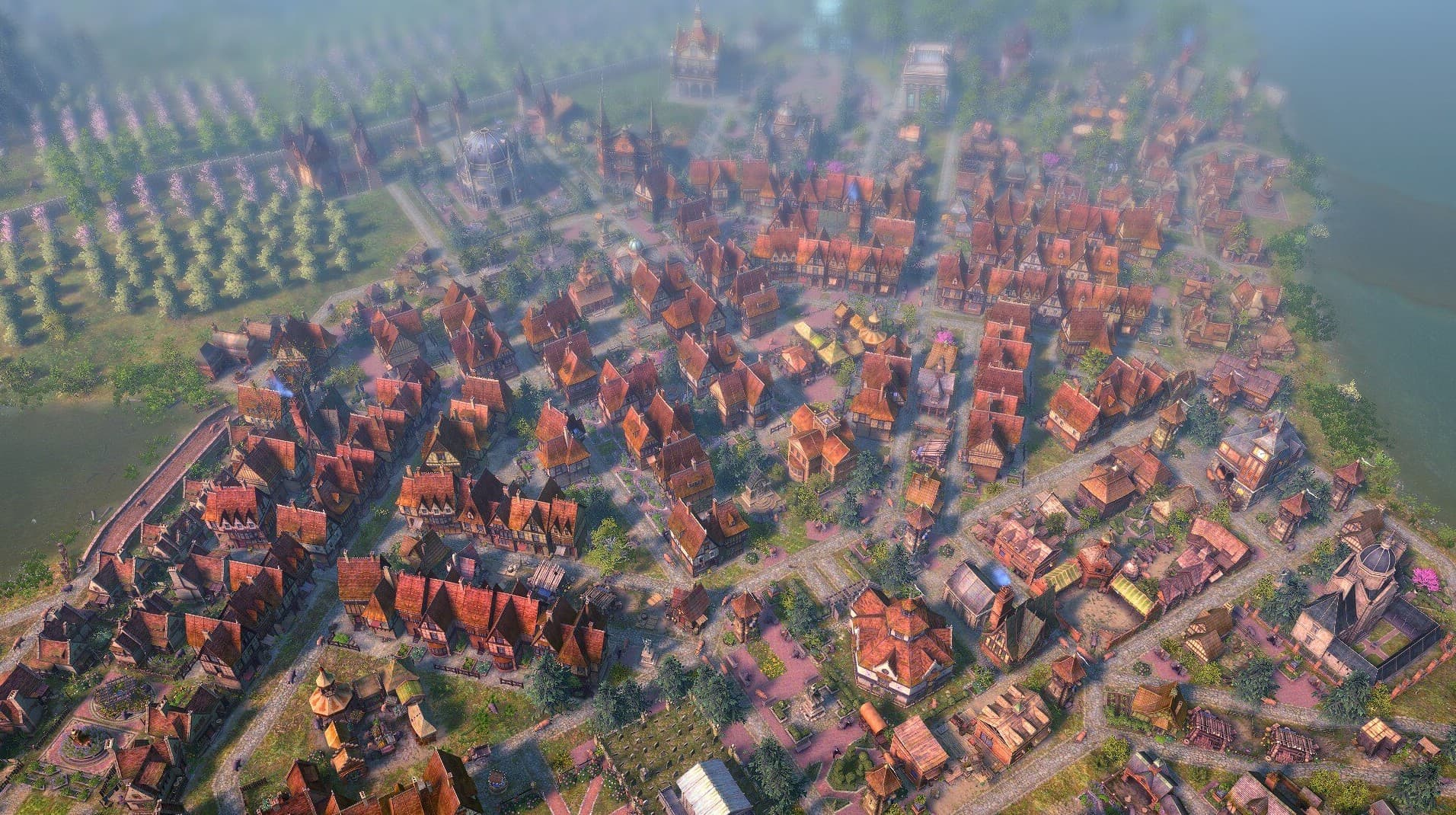
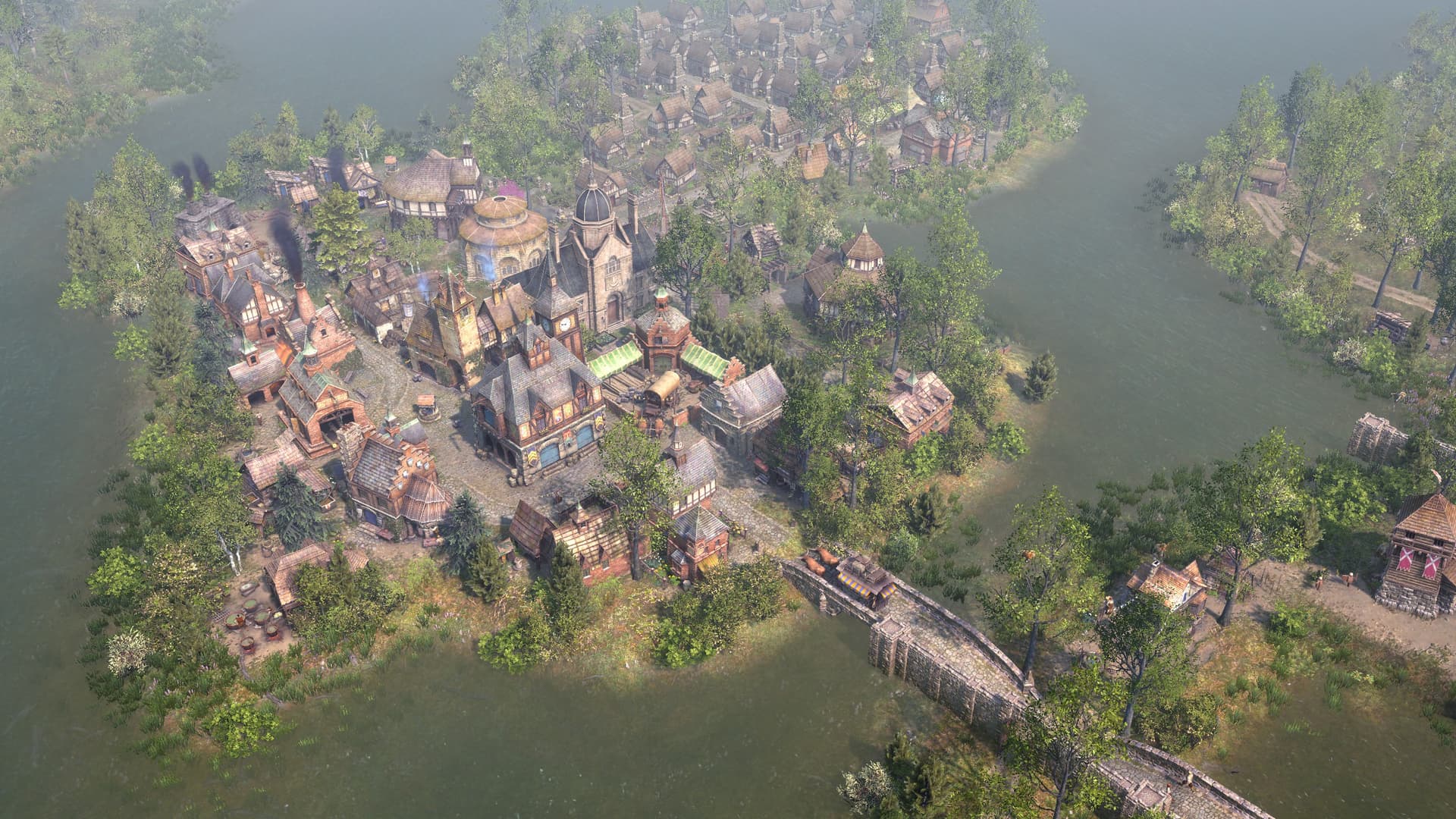

Share your best right here on our forum!


 Area Avoidance ( the banners were a nice addition, and MOVEABLE made it even better ) Hopefully no more mass graves after 2/3rds of your Town have decided they MUST recover that one Villager Corpse in the middle of a Tier3 raid Camp.
